
National Counselling Hotline:13802582525
Guangdong Friends Smart Technology LtdSince 1993 33 years of professional service +

 You are here:Home >> Test Cases
 Updated:2026-06-27
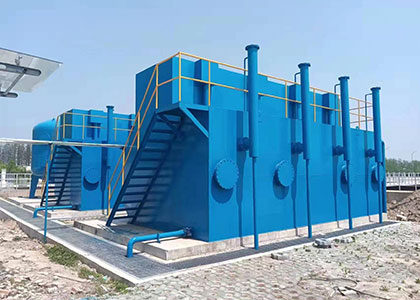
Water purification equipment, which refers to devices used to remove impurities from water and to improve water quality. Its core is filtration core, working through physical filtering, adsorption, etc. Mainstream technologies include reverse osmosis (RO), overfiltration (UF), NF, etc. Anti-permeability membrane filtration is the most accurate (about 0.0001 micrometres), with almost all impurities, such as heavy metals, bacteria, viruses, etc., filtering, producing pure water, and some minerals may be retained, for example, overfiltration. The types of equipment range from cooking water purification units, desktop water purification units to meet household water needs, to commercial water purification facilities that provide a large amount of direct water for public places such as schools, office buildings, etc. Modern water purification equipment often has smart features such as filtration core life alerts, real-time monitoring of water quality, and is moving towards house-wide clean water, healthy mineralized drinking water.
The reverse osmosis, a new membrane separation technology developed in the 1960s, is the process of separating solvents and solvents in the solution under pressure of the anti-permeability membrane.
The concept of “infiltration” should be understood in order to understand the rationale for the anti-infiltration approach. Infiltration is a physical phenomenon where two waters with different concentrations of salts, separated by a semi-permeable film, find that the water fraction with a low salinity is permeable through the membrane to a high salinity water, which contains no salt penetration, thus gradually melting the dichotomy to parity. However, it takes a long time to complete this process, also known as natural penetration. But if a pressure is added to the water side with high salinity, the result can also stop the infiltration, which is called the penetration pressure. If further pressure increases, water can penetrate in the opposite direction, leaving salt. Thus, the principle of anti-infiltration de-salinization is that in a water with salinity (e.g. the original water), the pressure is greater than that of natural permeation, so that the osmosis is carried out in the opposite direction, so that the water molecules in the original water are pressured on the other side of the membrane and become clean water, thus achieving the objective of removing the salinity from the water, which is the anti-infiltration de-salinization principle.
In addition to anti-infilm technologies, water purification equipment may use other membrane separation techniques, such as microfiltration (MF), overfiltration (UF) and leaching (NF). Microfiltration (MF) has a filtration accuracy of 0.1-50 micrometres, which is used mainly to filter large particles such as sand and rust in water. The filtration precision of the ultrafiltration (UF) is 1 nm-0.1 μm and the bacteria, large molecular organisms can be filtered, but the heavy metal ion cannot be filtered. The filtering precision of the net filter (NF) ranges from ultrafiltration to infiltration, with selective filtering of calcium, magnesium ions and parts of organic matter. Depending on the technology, market-based water purification units are mainly classified as active carbon water purification units, overfiltration water purification units and reverse osmosis water purification units.
Hotline:
0755-29905666